LeadCheck - Multi-Tenant Lead Management System
A comprehensive multi-tenant lead management application with database-per-tenant architecture, enabling organizations to efficiently manage leads with complete data isolation and client-specific customization.
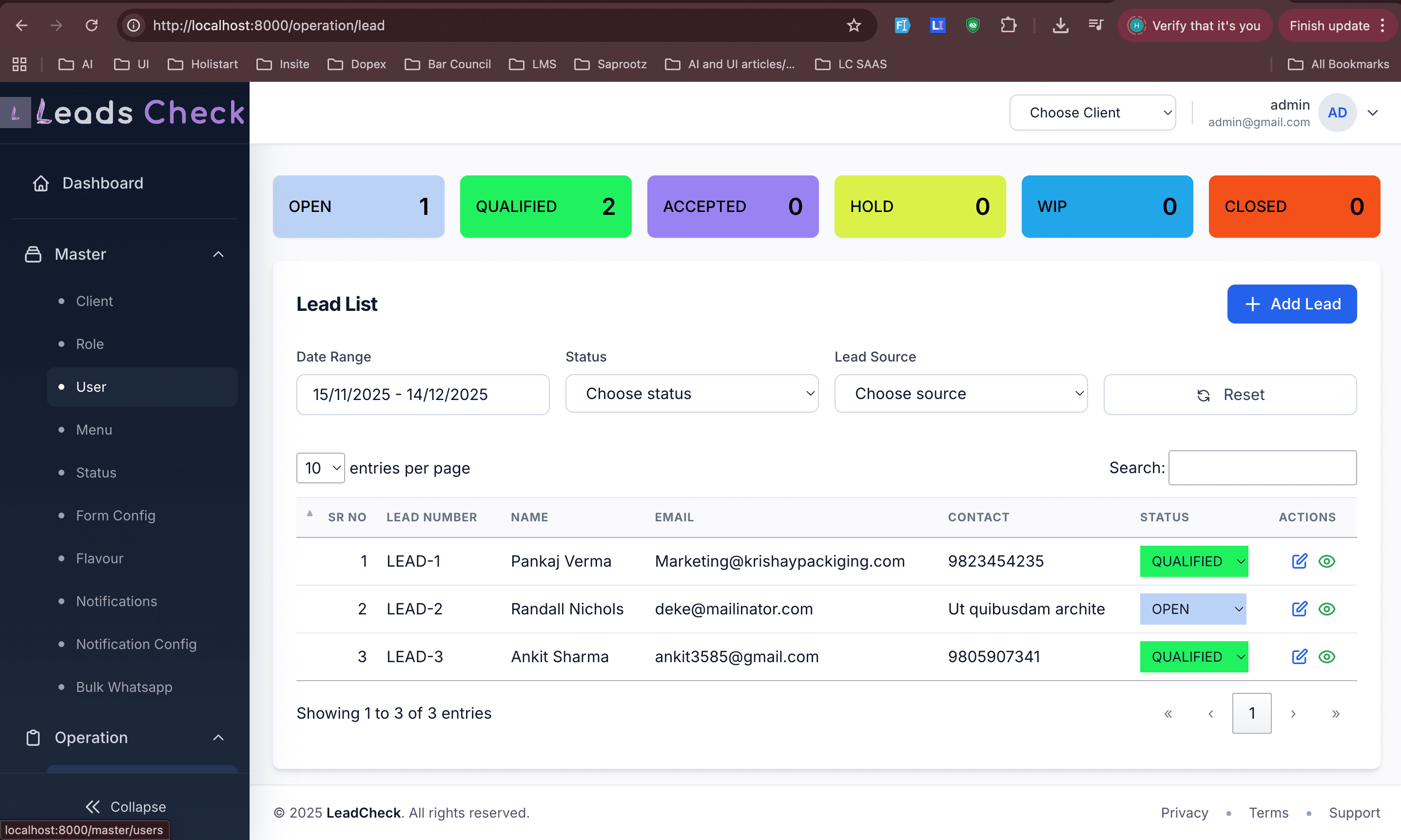
Project Gallery
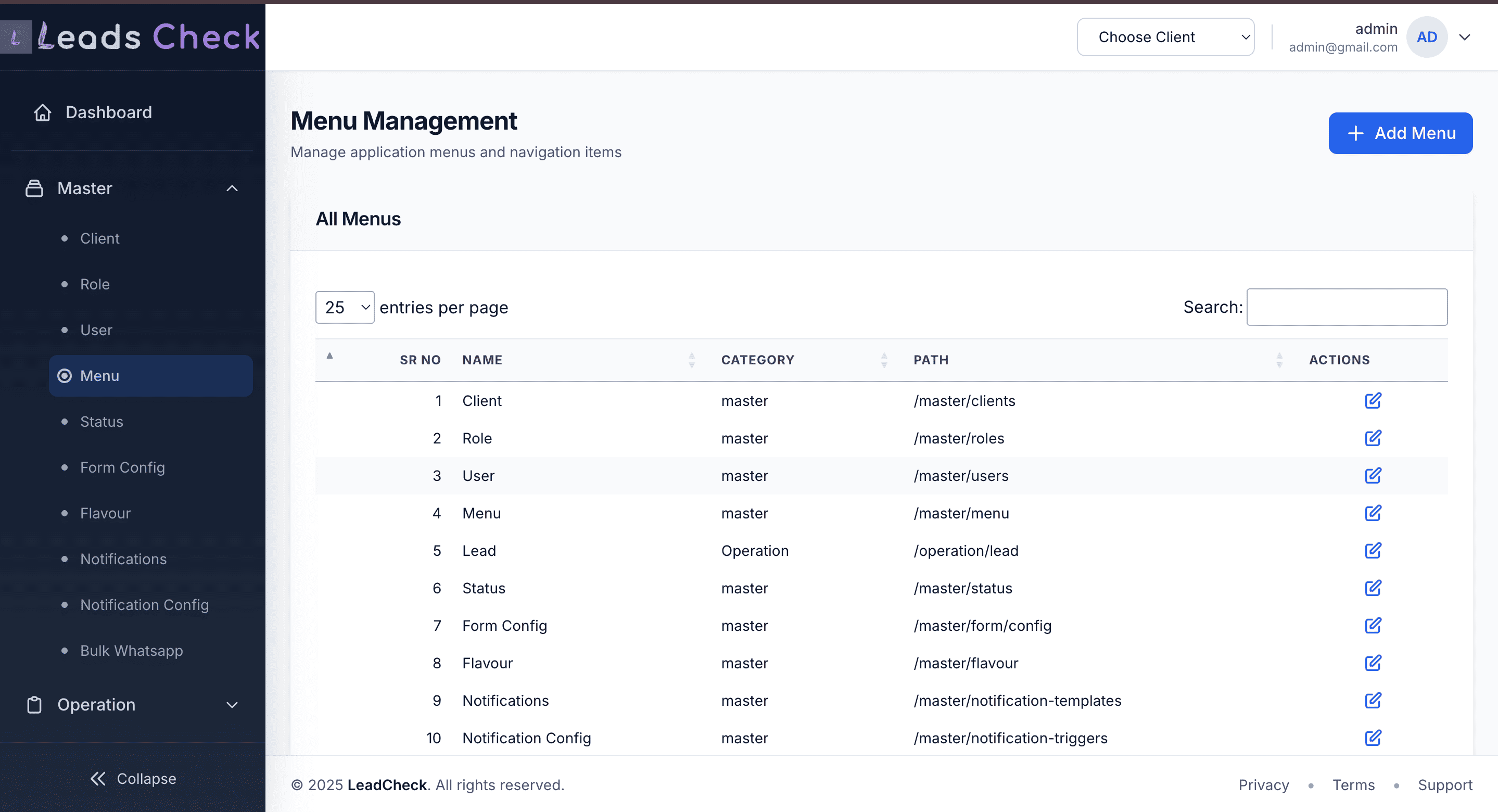
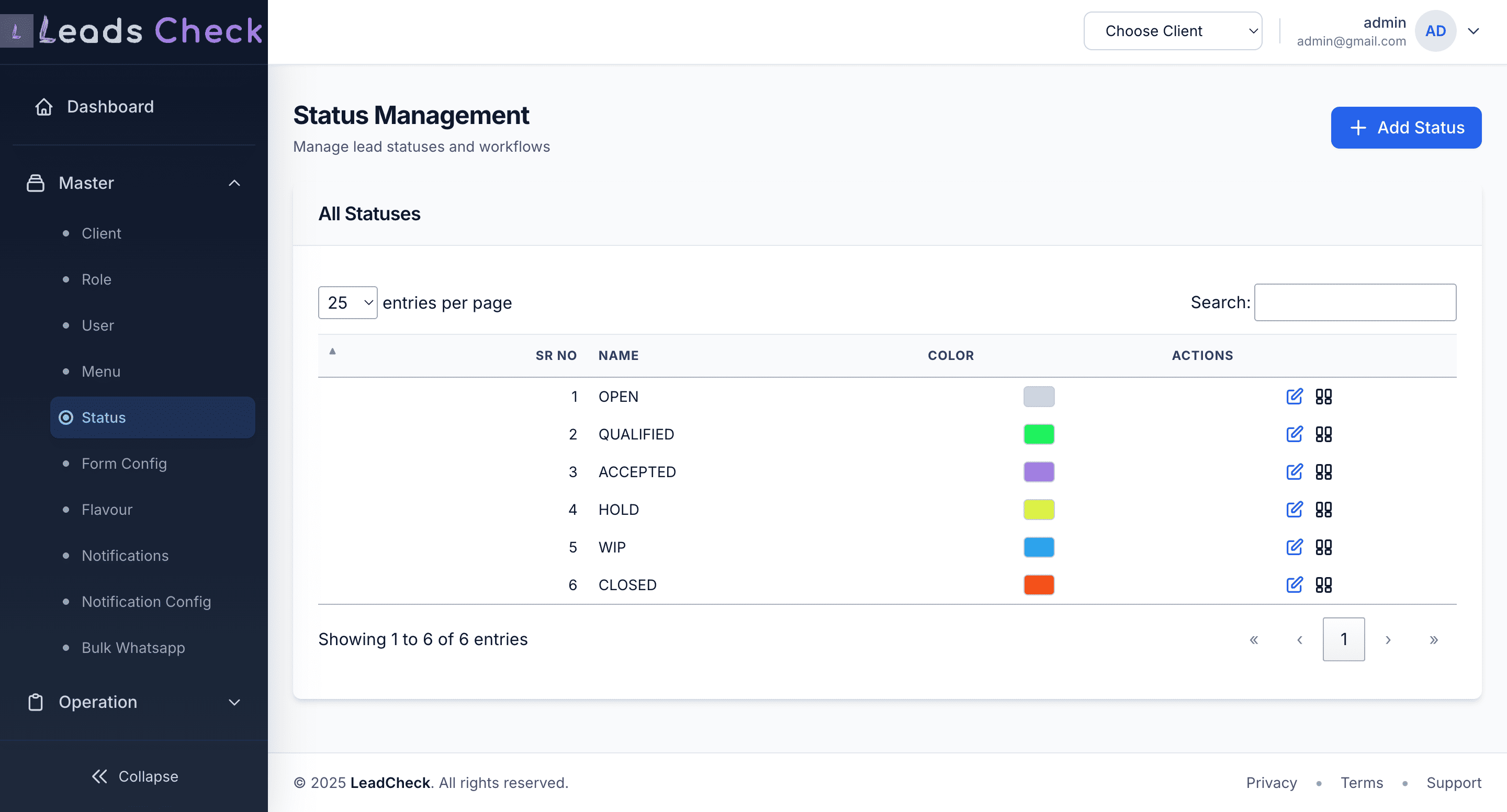
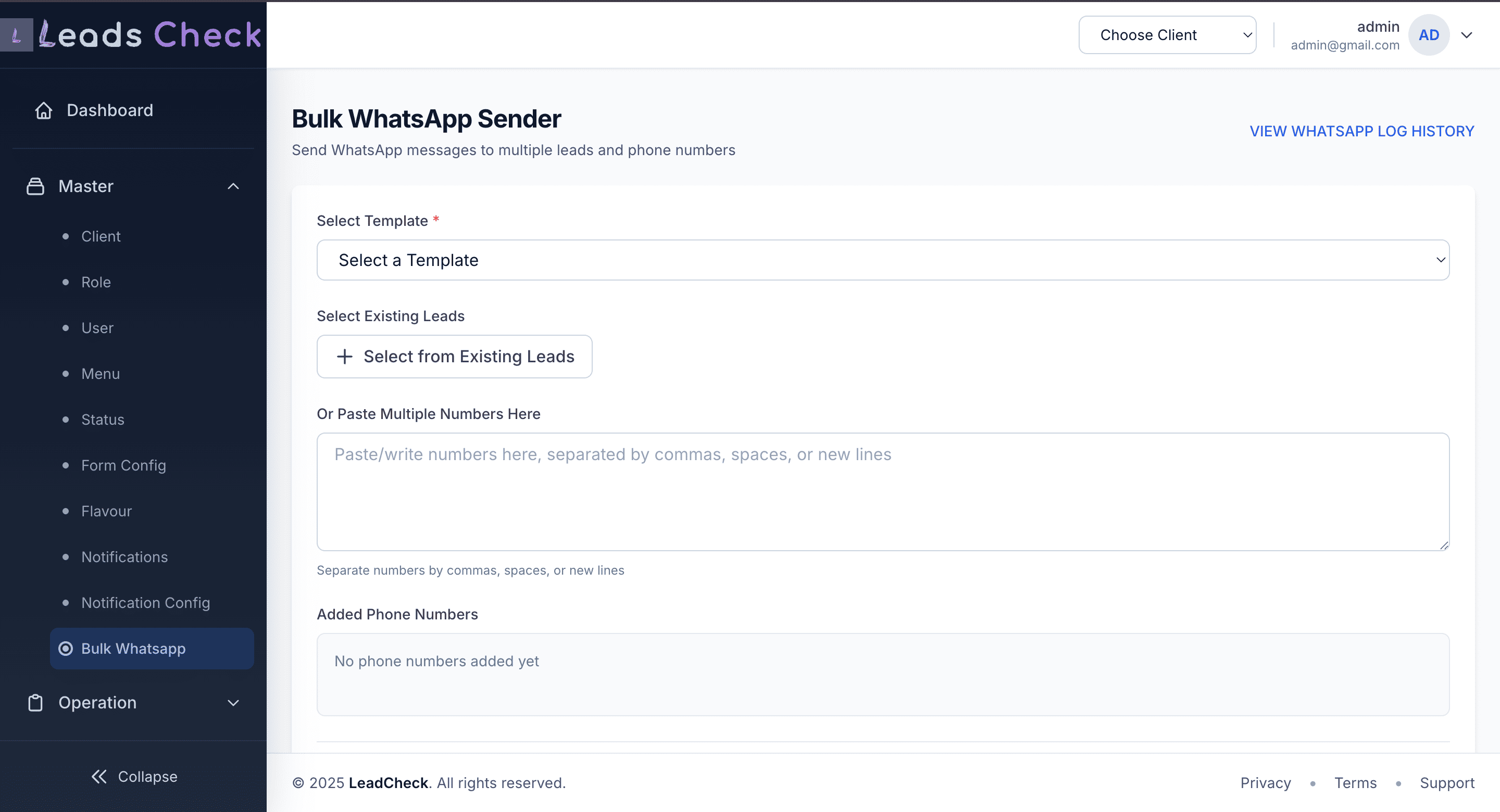
About the Project
LeadCheck is a comprehensive multi-tenant lead management application designed to serve multiple clients (tenants) from a single application instance while maintaining complete data isolation and security. The system enables organizations to efficiently manage leads, track status workflows, and customize form configurations per client. It implements a database-per-tenant architecture with dynamic connection switching, explicit menu-based access control, and client-specific customization capabilities.
Problem Statement
Modern businesses require a scalable solution to manage leads across multiple client organizations. The challenge lies in providing complete data isolation between different clients, ensuring scalability as the number of clients grows, allowing customization (forms, workflows) per client without code duplication, maintaining security and access control across tenants, and simplifying deployment and maintenance overhead.
My Solution
I implemented a database-per-tenant multi-tenancy architecture with a hybrid database model: a central main database manages global configuration, clients, users, roles, and menus, while each client has a dedicated, isolated database for operational data. The NewDbConnection middleware automatically switches database connections based on the logged-in user's client_id. Permission system uses direct user_menu_mappings with RouteGard middleware enforcement. Form configurations are assigned per client via client_configs, and each client maintains their own status definitions and workflow transitions.
Challenges & Learnings
Data Isolation
Implementing strict tenant isolation while maintaining code simplicity required careful middleware design with the NewDbConnection middleware that automatically switches database connections based on user context.
Scalability
Database-per-tenant architecture allows independent scaling and management of client databases, with job-based database provisioning for new tenants and custom migration commands across multiple databases.
Access Control Complexity
Designed explicit menu-based permissions using user_menu_mappings relationships, providing fine-grained control enforced by the RouteGard middleware at every route.
Configuration Management
Balanced flexibility with maintainability through a hybrid approach: per-client form customization via client_configs while keeping forms as static, maintainable Blade templates.
Technology Stack
Laravel
Provided robust framework with excellent support for multi-database connections, middleware architecture, and queue-based background processing essential for tenant database provisioning.
PHP
Enabled rapid development of the complex multi-tenancy logic with excellent Laravel integration and mature ecosystem support for enterprise applications.
MySQL
Supported the multi-database architecture with database-per-tenant isolation, allowing independent scaling and management of client databases.
Alpine.js
Provided lightweight reactive JavaScript for dynamic UI interactions without the overhead of a full SPA framework, perfect for Blade template enhancement.
DataTables
Enabled server-side processing for lead management tables with efficient pagination, sorting, and filtering across large datasets.